The Road Before the Road, Trail Ridge Road Update, and This Week in Estes Park
How convict labor, gravity-fed engines, and cars in reverse built the first automobile road in Rocky Mountain National Park
The Mountain Thread | Estes Park Newsletter | May 28, 2026 |
 |
BEFORE THE COFFEE GETS COLD
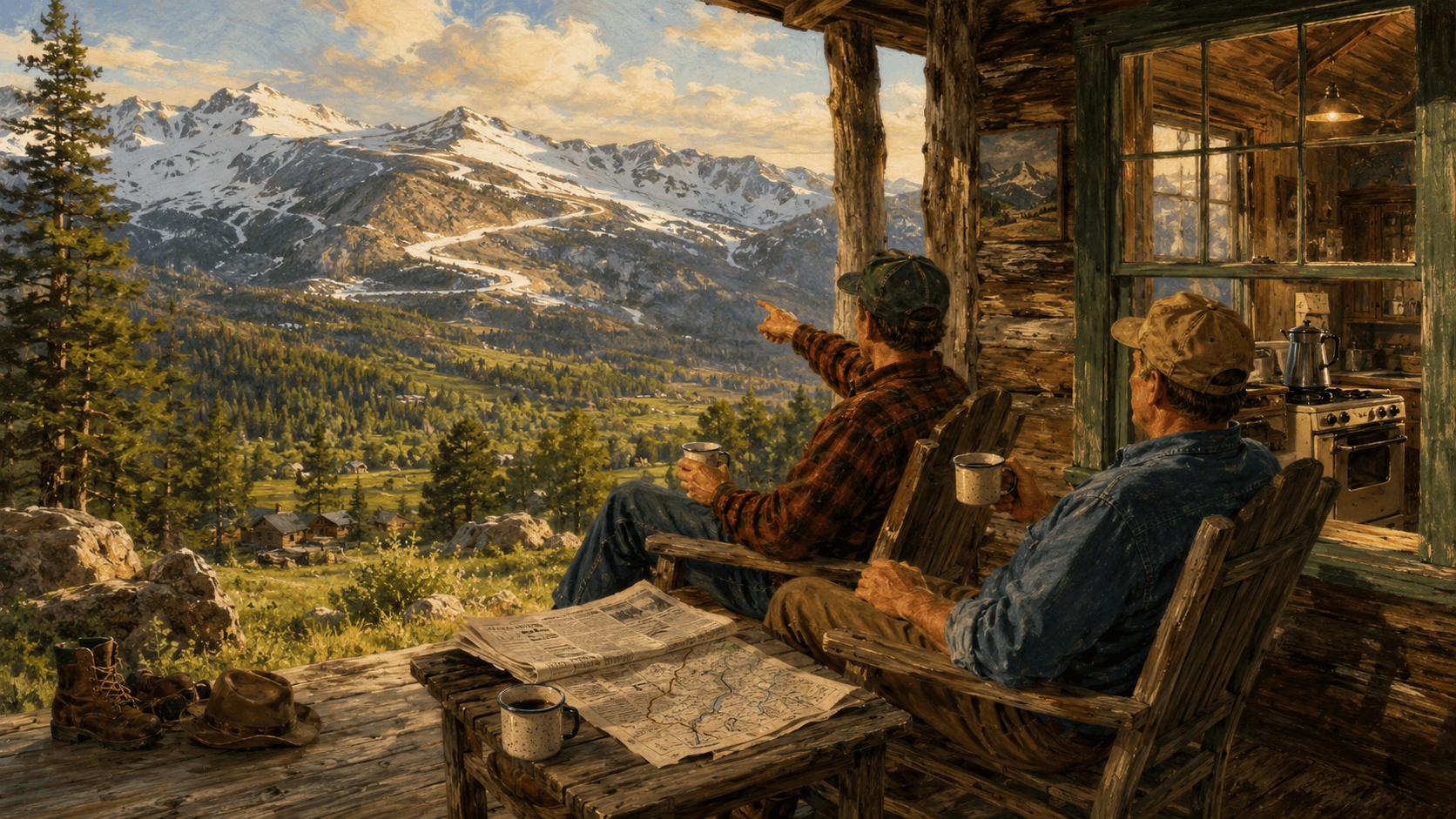
Moe drove up to Rainbow Curve on Tuesday afternoon just to look at where the road went from there.
He called when he got back and said the view from the end of the pavement was better than he expected. Snow still on the upper road. The plowing crews working their way toward the middle from both ends. No date announced. No promises made.
I told him that was pretty much how it has always worked up here. You build a road into the high country and then every winter the high country takes it back and every spring you go get it again.
He said he had never thought about it that way.
Memorial Day weekend is behind us. The Art Market is done. Trail Ridge Road is still closed but getting closer. Old Fall River Road will not open until around the Fourth of July in a normal year, and this year has not been normal.
While we are all waiting, it seemed like a good week to look at how we got roads up there in the first place. The first one required convict labor, horse teams, and cars that had to drive in reverse.
SIT DOWN. THIS ONE'S GOOD. |
What Was the First Road Into Rocky Mountain National Park?
The park existed before the road did. That is not how most people think about it. They picture Trail Ridge Road and assume it came with the place. It did not. Rocky Mountain National Park was established on January 26, 1915, and for the first five years of its existence, if you wanted to reach the high country you got on a horse or you walked.
The automobile was changing everything about how Americans traveled. The new park had no way to serve them.
Congress had authorized a road through the park back in 1913, two years before the park officially existed. Work started in September of that year, then World War I interrupted it in 1914. Construction resumed in 1918 and the road was dedicated on September 14, 1920. Nine and a half miles of one-way dirt. It nearly broke every car that tried to drive it.
Who Built It?
The first three miles were built by state prisoners. Not contract workers. Not a construction crew. Men serving state sentences, working with hand tools on the side of a mountain. Pickaxes. Shovels. Horses moving rock that the horses could move and men moving the rest. No mechanized equipment on that section. No shortcuts available at that elevation.
The rest of the road was built under Bureau of Public Roads supervision with contract labor, horse teams, and early mechanized equipment. The crews had a seasonal window of a few months each year. The high country above 11,000 feet does not negotiate on that point. They worked when the snow allowed and stopped when it did not.
The route they followed was not new. Native American hunters had moved through that valley for centuries in search of game. The path existed long before any automobile did. What changed in 1920 was that someone graded it, packed it, and told people to drive single file going uphill. Going uphill turned out to be the interesting part.
Why Did Early Drivers Go Up in Reverse?
The grades on Old Fall River Road reach sixteen percent. Go look that up if you want to understand what that means in practice. Modern highway design considers anything above six percent to be steep. Eight percent is significant. Interstate standards rarely allow more than five or six percent. Old Fall River Road, in places, is sixteen percent.
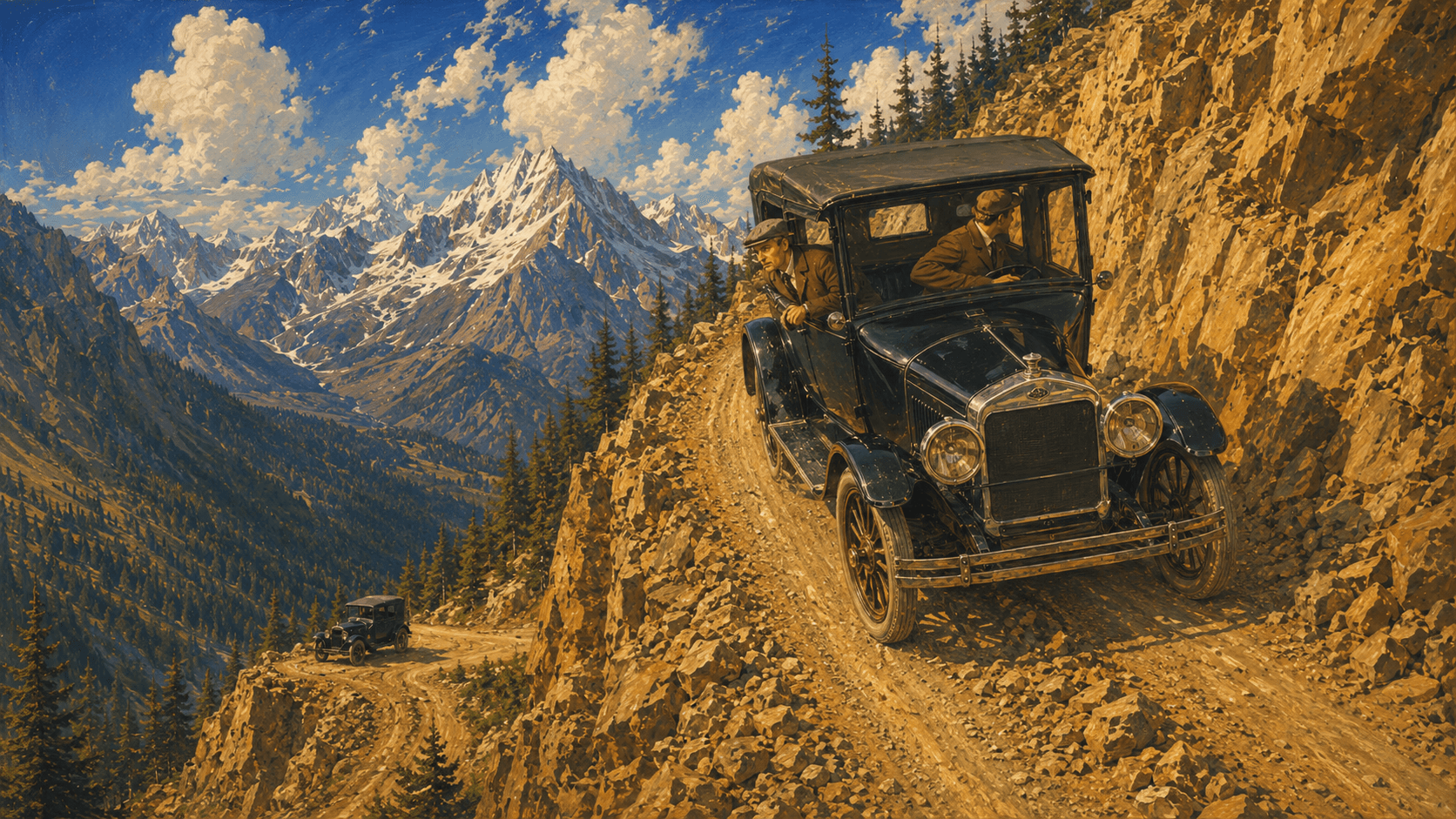
In 1920, the automobiles that drove it used gravity-fed fuel systems. The fuel tank sat above the carburetor. Fuel flowed downward into the engine by gravity. On a flat road or a gentle grade this worked fine. On a grade steep enough, the angle of the car interrupted the flow. The fuel did not reach the engine. The car stalled on the mountainside.
The solution was not a mechanical fix. There was no time for that. You put the car in reverse. In reverse, the geometry shifted. The tank fed the carburetor. The engine ran. You drove backward up the steepest pitches of the first automobile road in Rocky Mountain National Park, with the mountains in front of you and nothing but air and valley behind you, and the general understanding among everyone present that you did not look down.
This was not a workaround for unusual vehicles or inexperienced drivers. This was how it worked. Drivers knew before they started that certain sections required reverse. Families made the trip in reverse gear as a matter of routine. The mountain did not care which direction you were facing. It cared whether your fuel system was working.
Moe heard this story and said it explained a lot about early American tourism.
Why Did They Build Trail Ridge Road?Read More... |
 |
Trivia Question❓Old Fall River Road, the first automobile road in Rocky Mountain National Park, required some early drivers to shift into reverse on the steepest sections to keep their engines running. What feature of early automobile fuel systems made reverse gear the solution on steep uphill grades, and approximately what percentage grade did the steepest sections of Old Fall River Road reach? Answer at the bottom of the newsletter |
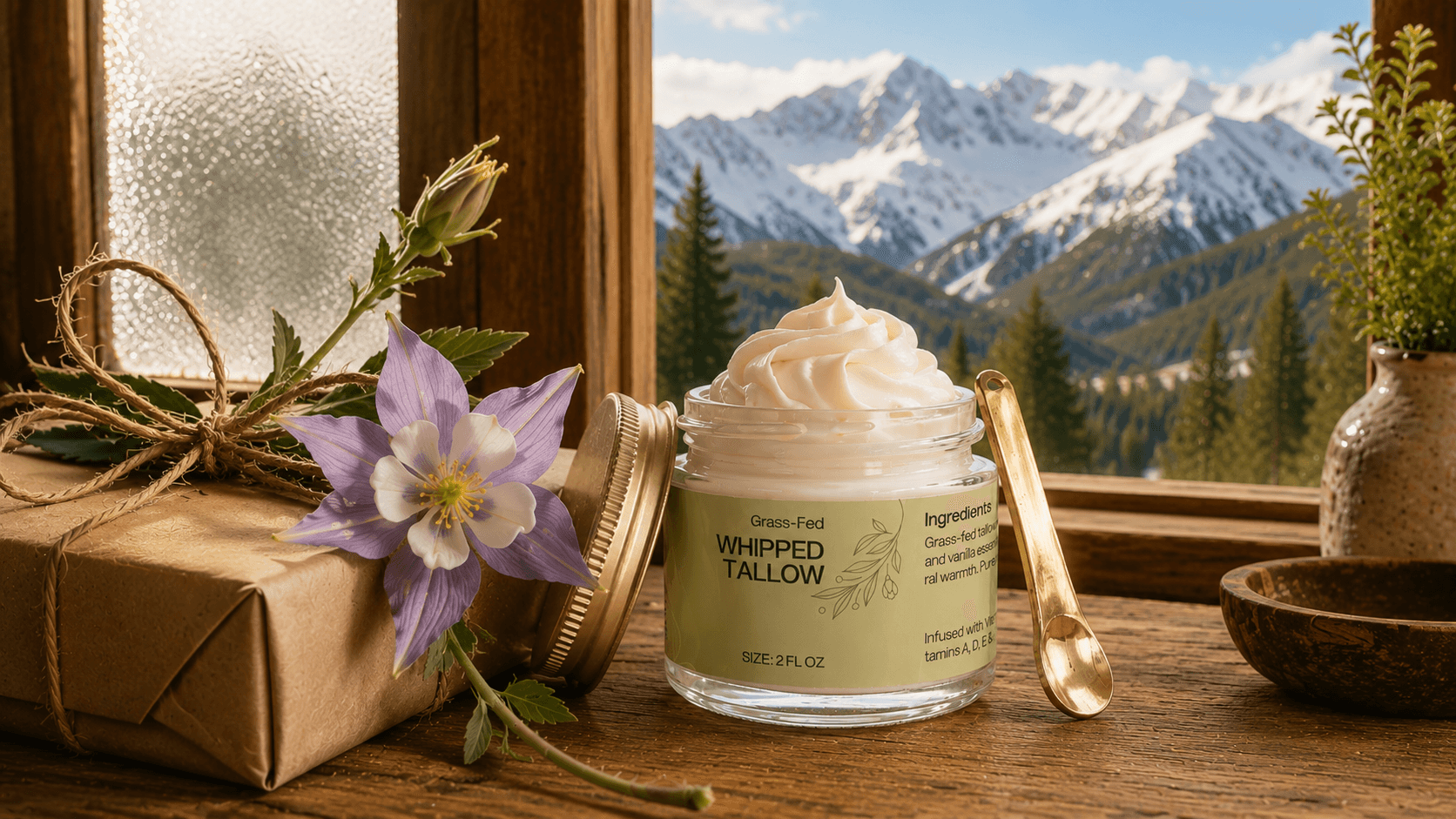
Explore the collection at AlpenglowBeauty.com and enjoy 20% off with code RIDGE20 through May 31. |
|
RMNP UPDATE
Trail Ridge Road remains closed to through travel. The road is open on the east side to Rainbow Curve and on the west side to Milner Pass. The stretch between those two points is still closed due to winter weather conditions and ongoing plowing operations. No opening date has been announced.
Call 970-586-1222 for the recorded road status line, updated regularly. Check nps.gov/romo before you go. Conditions at 12,000 feet can change faster than any forecast.
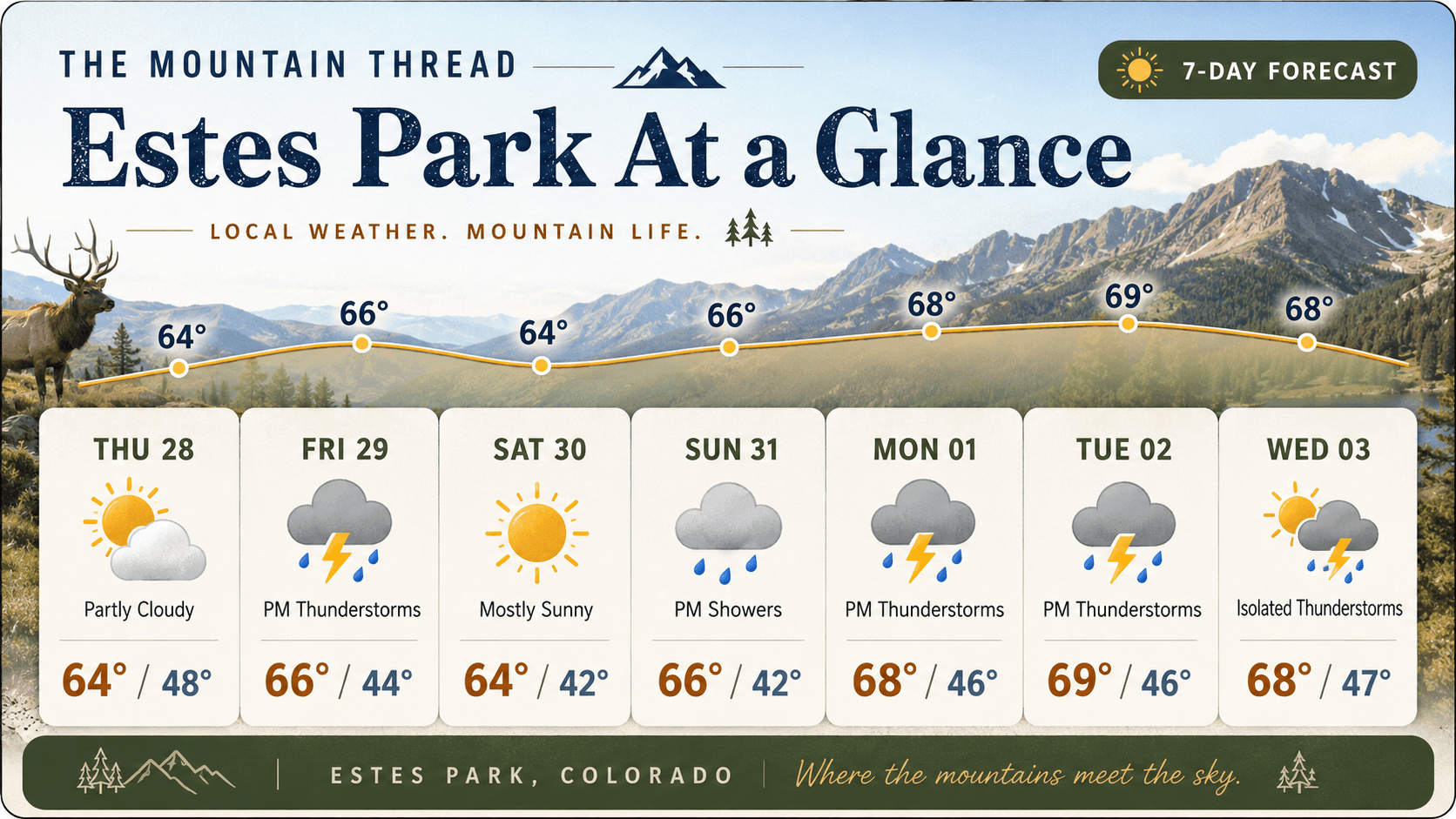
Lower elevation trails are accessible and improving. South-facing slopes below 9,500 feet are showing wildflowers ahead of their normal schedule thanks to the staggered bloom from the May snowstorm. Early morning is the best time on the lower trails. The afternoon thunderstorm pattern is beginning to establish itself. Start early, be off exposed terrain by early afternoon, pack layers regardless of what the morning looks like.
Timed entry permits are required through June 30. General access requires a permit between 9 a.m. and 2 p.m. Bear Lake Road Corridor requires a permit between 5 a.m. and 6 p.m. A separate park entrance fee or pass is required in addition to any permit. Entry outside those windows does not require a permit. Forty percent of permits are released at 7 p.m. MDT the night before your visit on Recreation.gov. |
DID YOU KNOW?
Old Fall River Road was dedicated on September 14, 1920, making it the first automobile road in Rocky Mountain National Park. The initial three miles from the park entrance to Chasm Falls were built by state prison laborers using hand tools and horses. No mechanized equipment. Pickaxes, shovels, and human effort up the side of a mountain.
The grades on Old Fall River Road reach sixteen percent in the steepest sections, more than twice the maximum grade of Trail Ridge Road, which was engineered not to exceed seven percent. Modern interstate highway standards rarely allow grades above five or six percent.
Trail Ridge Road opened July 15, 1932, eleven years after Old Fall River Road. In the first year after opening, one million people visited Rocky Mountain National Park. Old Fall River Road, which had handled all that traffic on nine and a half miles of one-way dirt, was finally given a rest.
Old Fall River Road typically opens around the Fourth of July each year, after Trail Ridge Road opens. It is one-way, unpaved, and still follows the same route that Native American hunters used for centuries before anyone thought to grade it. In a heavy snow year do not count on an early opening. |
Buck's Joke Of The Day |
In 1920, you could drive the first automobile road into Rocky Mountain National Park.
It was nine and a half miles of one-way dirt with grades steep enough to stall your engine.
The solution was to drive in reverse. Americans drove in reverse up the side of a mountain in Rocky Mountain National Park and called it a road trip. Trail Ridge Road was built eleven years later so people could drive forward.
Both roads are currently closed. (The cars in reverse thing is documented history. Trail Ridge Road opening in late May or early June is also documented history. Some problems take longer to fix than others.) |
💡 Answer to Trivia Question: Early automobiles used gravity-fed fuel systems in which the fuel tank sat above the carburetor and fuel flowed downward by gravity into the engine. On a steep enough uphill grade, the angle of the car prevented fuel from reaching the engine, causing it to stall. In reverse gear, the geometry shifted enough to restore proper fuel flow and keep the engine running. Old Fall River Road had grades reaching approximately sixteen percent on its steepest sections, more than twice the maximum grade of Trail Ridge Road, which was engineered not to exceed seven percent |
UNTIL NEXT WEEK
Moe finished his coffee and said he was going to drive up to Rainbow Curve again this afternoon and have a look. I told him the road was still closed past Rainbow Curve and had been for weeks.
He said he knew that. He just liked looking at where it went from there. That is the right approach to a closed road. You look at where it goes. You wait for the people who know what they are doing to finish what they are doing. You trust that the high country will still be up there when it opens.
It has been up there since before the convicts built the first road to it in 1913. It will be up there when Trail Ridge Road opens for the season. It will be up there when Old Fall River Road finally opens after that. Some things outlast the waiting. The high country is one of them. Stay smart, stay safe, and keep an eye on Rainbow Curve.
.- Buck Timber The Mountain Thread themountainthread.com/signup |
This account draws from National Park Service records, the documented construction history of Old Fall River Road and Trail Ridge Road, and the living history of the Estes Valley. The facts are solid. The cars really did drive in reverse. - Buck |
Share The Mountain Thread with someone who loves this valley. themountainthread.com/signup |