
Too Many Hills. Not Enough Candy. |
Did steep hills bring Halloween downtown, or is there more to the story? |
HALLOWEEN ON ELKHORN One little chocolate bar is a poor return on a mountain expedition. 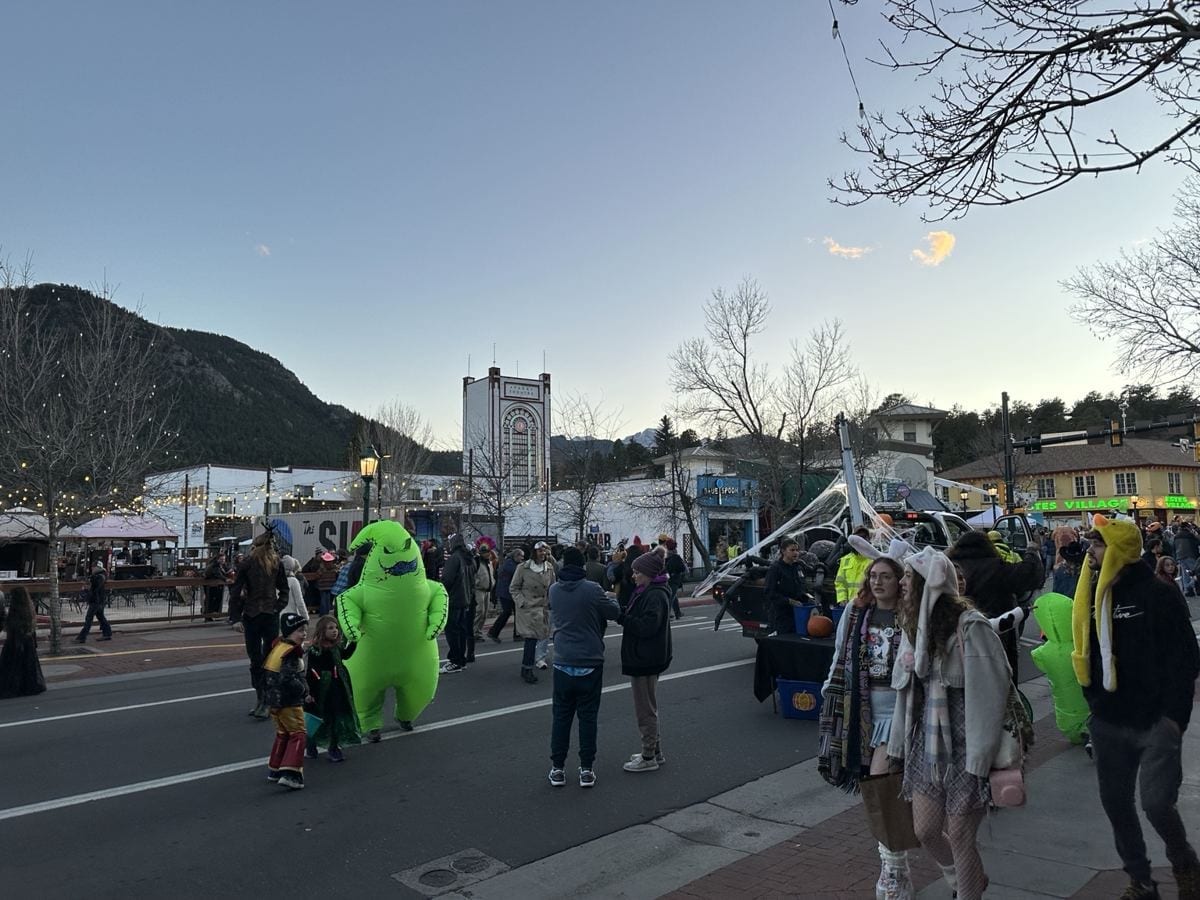 Photo: Sherry F., Halloween 2025.
Moe had figured out why Estes Park does its trick-or-treating downtown.
Nobody had asked him to investigate. He’d arrived at the answer while sitting down, which is how he prefers to approach questions involving hills.
“Candy per mile,” he said.
“You’ll have to explain that.”
“Picture a little kid dressed as a skeleton. He climbs a driveway, rings the bell, gets one miniature chocolate bar. Then he turns around and sees the next porch light halfway up another mountain.”
“That might be an exaggeration.”
“So is calling that thing a candy bar.”
He had a point about the chocolate.
By the third house, Moe figured, the skeleton would need a sandwich. The pirate would be dragging his sword. Somebody’s mother would be carrying a pumpkin bucket, two costume pieces and a child who had announced that Halloween was over.
“Eventually,” he said, “somebody must have looked downtown and noticed all those doors right next to each other.”
It was a tidy explanation. A little too tidy, considering it had come from a man who sometimes drives to get the mail.
Still, with Halloween coming around again, I wanted to know.
Was downtown trick-or-treating simply what happened when mountain children demanded a better return on their walking?
Moe Wasn’t Entirely Wrong
That will be difficult to live with, but there it is.
In a 2016 Trail-Gazette column, Charley Dickey described seeking out former Estes Park resident Moses Street and asking him how the celebration began.
Street remembered three things working in favor of a downtown Halloween: concern about dangerous incidents elsewhere in the country, homes scattered across the Estes Valley, and less activity downtown by late October.
So the distance between houses really was part of his thinking.
Moe leaned back. “I accept your apology,” he said.
“I haven’t offered one,” I said.
“Take your time,” Moe said.
But the story didn’t end with somebody noticing the geography. Street loved Halloween. He wanted to get something going, and that meant persuading the people behind those conveniently spaced doors to participate.
According to Dickey’s account, he visited businesses and asked them to stay open and hand out candy.
Imagine making that pitch before there was a crowd to point to. Today, people know what downtown Halloween looks like. Back then, somebody had to be willing to try it without knowing whether anyone would come.
Street kept his shop open.
Very few others joined him that first year.
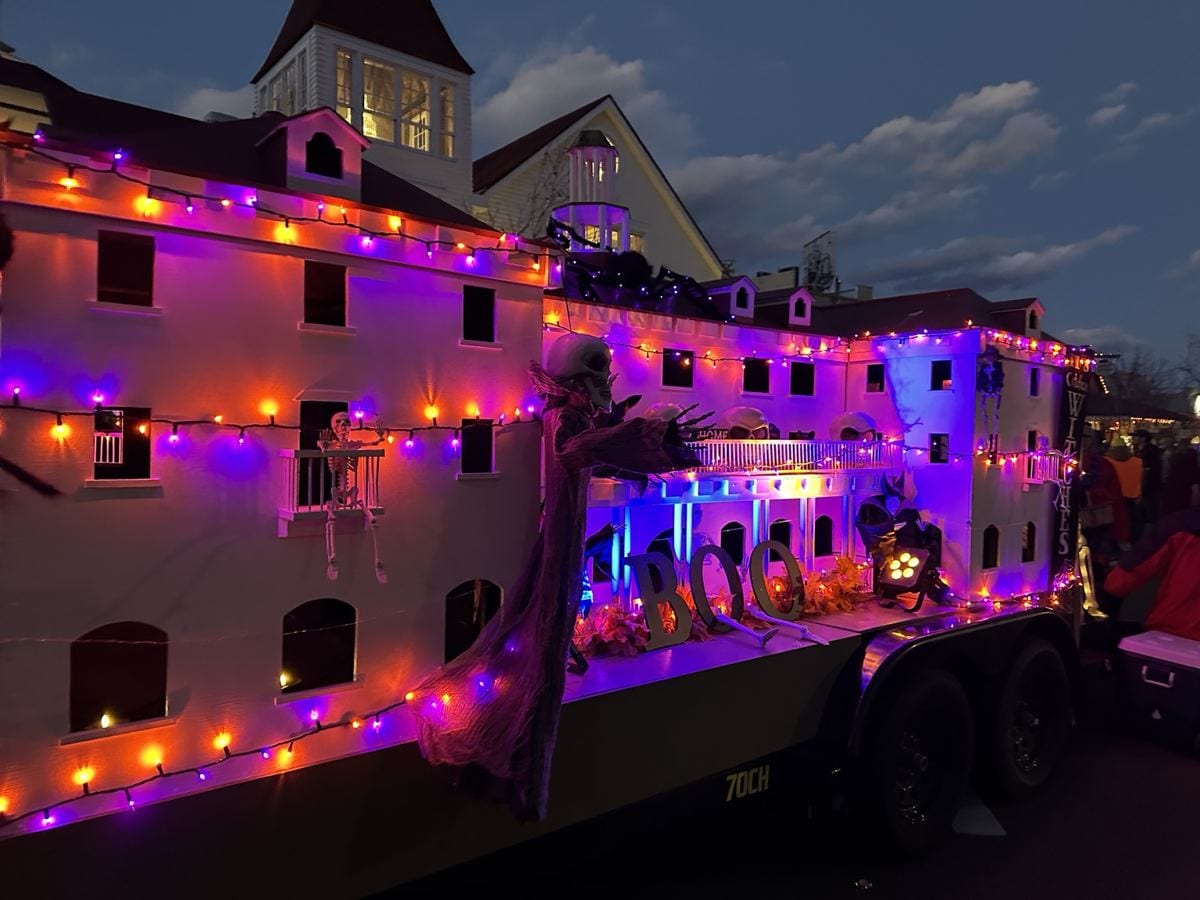
Downtown Halloween, lit up for the evening. Photo: Sherry F., Halloween 2025.
Now for the Part Moe Didn’t Know
Street remembered about forty people showing up.
Forty is enough to make a pleasant evening. It isn’t necessarily enough to persuade a doubtful neighbor that they missed the event of the season.
When people asked how it had gone, Street gave them a rather different impression.
Dickey reported that Street recalled telling others he’d had more than two hundred visitors and a very good sales day.
Moe stopped stirring his coffee.
“Two hundred?”
“That’s what he recalled saying.”
“And forty actually came?”
“About forty, according to the interview.”
Moe studied the table for a moment.
“I’ve been counting my fishing trips all wrong.”
I wouldn’t recommend either method of accounting. Forty people had come, and Street was already trying to get a bigger crowd for next year.
More businesses participated the second year. More joined in the third.
We can’t measure how much that enthusiastic report helped. What we can say, following Street’s recollection, is that the idea kept finding people willing to give it a chance.
When the Street Became Part of It
The dates need a little care.
In Dickey’s interview, Street wasn’t certain whether his initial effort began in 1981 or 1982. A later Trail-Gazette editorial credited research by Estes Park Museum Director Derek Fortini with tracing the street-closing tradition to 1983.
Those accounts may describe different stages: the first attempt at the shops, followed by the organized celebration that made room for children in the street.
The editorial also pointed to Bill Clough’s reporting in the October 26, 1984 Trail-Gazette. By then, more than sixty businesses and services were preparing to participate, with owners and managers dressing up for the children.
There’s a picture worth holding onto. The adults were getting their costumes ready, too.
Somewhere between a shopkeeper trying an idea and dozens of businesses joining in, Halloween had become something people prepared for together.
“And the doors were still close together,” Moe said.
“Yes, Moe.”
He wasn’t letting that go.
Neighbors eventually helped fill the candy bowls, too: Dickey dates the Safeway collection to 2011 and the Visitors Center’s participation to 2013.
Which Story Do You Like Better?
Moe still prefers his explanation: too many hills, too much walking, not nearly enough chocolate.
The documented history gives us a Halloween enthusiast, a small first turnout, an inflated report and other merchants gradually joining him.
As it turns out, there’s room for some of Moe’s geography in the real story.
Which part do you like best? And if you remember those early downtown Halloweens, send a note to Buck’s mailbag. What did you wear? Which shop do you remember? Were you one of the forty?
Moe says he might have been.
I told him we’re checking the numbers this time.
THE STORY BEHIND THE STORY
The early-event recollections come from Charley Dickey’s October 31, 2016 Trail-Gazette column, based on his interview with Moses Street. The 1983 street-closure date and details of Bill Clough’s 1984 reporting come through the Trail-Gazette’s October 15, 2021 editorial, which credits museum director Derek Fortini’s research.
That editorial uses the name Moses Swindler in its historical quotation; Dickey’s interview identifies Moses Street. The name difference remains unresolved here. Moe’s uphill expedition and our coffee-table conversation are imagined; the scattered homes were a reason Street actually gave.
If Moe counts your candy, ask for a recount.
|
0 Comments
Join the conversation
Be the first to comment
Share your thoughts above.